 English
 हिंदी
हिंदी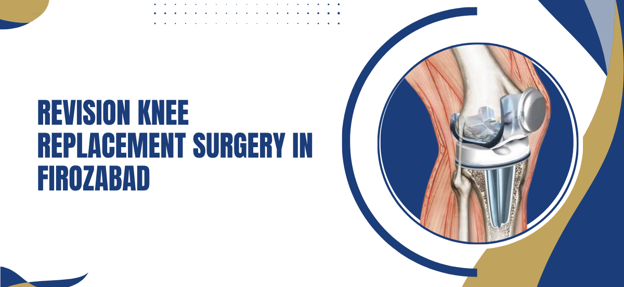
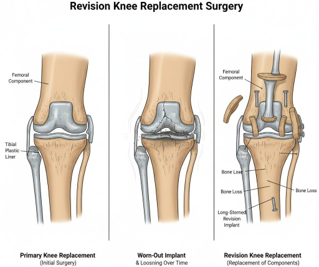
A knee replacement is designed to last 15 to 20 years for most patients, but no implant is permanent. When the original prosthesis wears out, loosens, becomes infected, or stops functioning correctly, a second operation may be required. This procedure is called revision knee replacement surgery, and it involves replacing some or all of the components of the original implant with new ones.
Revision surgery is more complex than the primary procedure and requires careful evaluation, specialised implants, and an experienced surgical team. Timely revision knee replacement surgery in Firozabad from a trusted orthopedic doctor in Firozabad prevents further bone loss and protects long-term knee function.
“A revision is not simply a repeat of the first operation. The bone has changed, the soft tissues have changed, and the planning is far more detailed. The aim is to restore stability and relieve pain while preserving as much bone as possible for the future.” — Dr. Parv Mittal, Consultant Orthopedic Surgeon, Firozabad
Revision Knee Replacement: Partial, Total, and Two-Stage Explained
Revision knee replacement is a procedure to repair or replace a previously implanted artificial knee that is no longer functioning correctly. The surgeon removes the failed components and implants new ones, often with specialised tools to address bone loss and altered anatomy.
- Partial revision: Only the worn or loose components are replaced, while well-fixed parts of the original implant remain in place.
- Total revision: All components of the original knee replacement are removed and replaced with new prosthetic parts.
- Two-stage revision: Used in cases of infection. The implant is removed in the first surgery, the joint is cleared of infection, and a new implant is placed during a second operation weeks later.
A revision is longer and more technically demanding than a primary total knee replacement surgery in Firozabad, which is why surgical planning starts well before the operation itself.
6 Common Reasons a Knee Replacement Fails
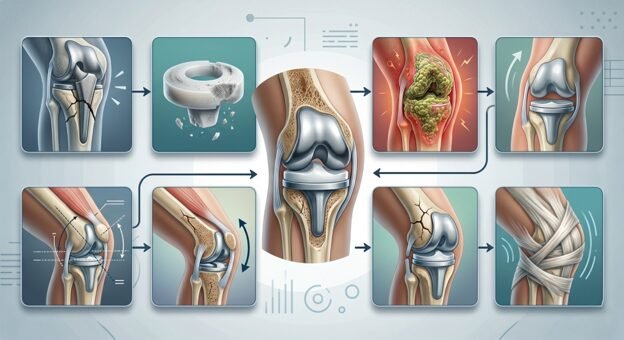
Modern knee implants are reliable, but failure can occur at any stage after surgery. The most common causes are well established.
- Implant loosening: The bond between the implant and the bone weakens over time, allowing the prosthesis to shift during movement.
- Wear and tear: The plastic spacer between the metal components gradually wears down with use, particularly in younger and more active patients.
- Infection: Bacteria around the implant cause persistent pain, swelling, and warmth, and infection is one of the leading reasons for revision.
- Instability: The ligaments supporting the knee weaken or stretch, causing the joint to feel loose or give way.
- Periprosthetic fracture: A fracture of the bone around the implant, often from a fall, can disturb the fixation of the prosthesis and may require expert fracture and trauma care alongside revision surgery.
- Stiffness: Excessive scar tissue restricts movement and prevents the knee from bending or straightening fully.
Identifying the exact cause of failure shapes the entire revision plan, which is why imaging and laboratory tests are essential before surgery.
Signs Your Knee Replacement May Have Failed
Revision surgery is considered when symptoms point to a failed implant rather than normal post-operative recovery. The decision is based on examination, imaging, and the impact on daily life.
- Persistent pain in the knee that does not improve with rest or medication.
- Swelling that returns repeatedly without an obvious cause.
- A knee that feels unstable, loose, or gives way during walking.
- Reduced range of motion, with the knee becoming stiffer over time.
- Warmth, redness, or fluid around the joint, which may indicate infection.
- A fall or injury that has changed the way the knee feels or functions.
Concerned about an old knee replacement? Get it examined before further damage develops.
Tests Used to Confirm a Failed Knee Replacement
Confirming that a knee replacement has failed requires a combination of clinical assessment and detailed imaging.
- Physical examination to check stability, range of motion, and tenderness around the implant.
- X-rays to look for loosening, component shift, or fractures around the prosthesis.
- CT or MRI scans to assess bone loss and the position of the implant in detail.
- Blood tests to check for raised infection markers such as ESR and CRP.
- Joint fluid aspiration, in which a sample of fluid is drawn from the knee and tested for bacteria.
The findings together determine whether revision is required, and if so, whether a partial, total, or two-stage procedure is appropriate.
Step-by-Step: How Revision Knee Replacement Is Performed
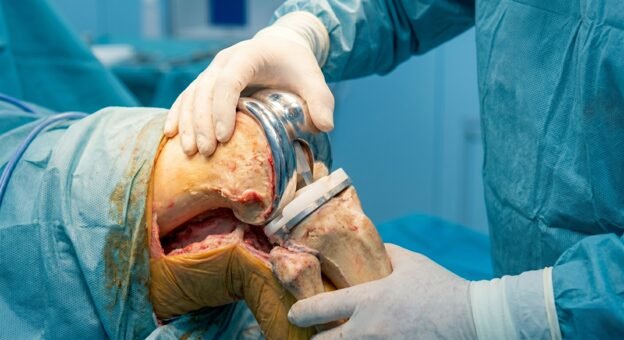
Revision surgery follows a structured sequence and is typically performed under spinal or general anaesthesia.
- Removal of the existing implant: The surgeon carefully removes the loose, worn, or infected components without damaging the surrounding bone.
- Assessment and bone preparation: Damaged bone is cleared and prepared to receive the new implant. Bone graft or a metal wedge may be used to make up for any lost bone.
- Implantation of new components: New prosthetic parts, often larger or specialised for revision use, are fixed in place with bone cement.
- Soft tissue balancing: Ligaments and surrounding tissues are adjusted to restore stability and alignment.
The procedure usually takes longer than a primary knee replacement, and the hospital stay is generally a few days.
Revision Knee Replacement vs Primary Knee Replacement: Key Differences
Both procedures share the same goal of relieving pain and restoring function, but the two operations differ in several important ways.
| Feature | Primary Hip Replacement | Revision Hip Replacement |
| Purpose | Replace a damaged natural knee | Replace a failed artificial knee |
| Complexity | Standard procedure | Longer, more complex procedure |
| Implants used | Standard prosthesis | Specialised revision implants with longer stems or augments |
| Bone condition | Generally healthy | Often weakened or partly lost |
| Recovery time | Around three months | Longer, often three to six months |
| Risk profile | Low, well established | Higher than primary surgery |
A clear understanding of these differences helps patients prepare for what is involved and what to expect after the operation.
Revision Knee Replacement Recovery: Timeline and What to Expect
Recovery after revision surgery is steadier than after a primary knee replacement and follows a defined progression.
- Early mobilisation: Walking with a walker or crutches usually starts within one to two days of surgery.
- Physiotherapy: A structured rehabilitation programme rebuilds strength and restores range of motion over several weeks.
- Wound care and monitoring: Regular follow-up appointments check the surgical site, alignment, and overall recovery.
- Return to daily activity: Most patients resume light routine activities within six to twelve weeks.
- Long-term care: Long-term joint protection, weight management, and avoiding high-impact activity help the new implant last.
Patience during rehabilitation is essential, as the tissues and bone need more time to heal than after the first surgery.
Considering revision surgery? A specialist assessment provides a clear treatment plan.
Symptoms That Should Prompt an Urgent Consultation
Some symptoms after a knee replacement should not be ignored, as early review prevents further damage to the joint.
- Persistent or worsening pain in a previously settled knee replacement.
- A new sense of looseness, instability, or grinding in the joint.
- Warmth, redness, or fluid around the knee, which may suggest infection.
- A fall or injury followed by pain, swelling, or change in alignment.
- Difficulty bearing weight on the leg or a clear reduction in walking distance.
Patients with a long-standing knee replacement should attend regular follow-up reviews with an experienced orthopedic specialist in Firozabad, even when the joint feels well, so that subtle changes are picked up early.
Why Choose Dr. Parv Mittal for Revision Knee Replacement Surgery in Firozabad?

The complexity of revision surgery makes the choice of surgeon especially important.
Dr. Parv Mittal is a trusted orthopedic specialist in Firozabad with M.S. Orthopaedic Surgery, MRCS (UK), and DNB Orthopaedics, supported by over 10 years of experience across reputed hospitals in New Delhi. His training in joint replacement and arthroscopy enables him to manage both primary and revision procedures with modern techniques, including robotic-assisted knee surgery where appropriate.
Patients complete the first consultation with a clear understanding of the cause of implant failure and a defined treatment plan, whether that involves partial revision, total revision, or staged surgery for infection. This combination of detailed planning and surgical experience makes him a reliable choice for revision knee replacement surgery in Firozabad.
Protect long-term knee function before further bone loss develops.
Frequently Asked Questions
How long does a knee replacement last before revision is needed?
Most modern knee implants last 15 to 20 years, though younger or more active patients may need revision sooner.
Is revision knee replacement surgery more painful than the first surgery?
Pain levels are similar, but recovery is generally slower because the procedure is more complex and the surrounding tissues need longer to heal.
Can a revision knee replacement be done more than once?
Yes, but each subsequent revision is more challenging due to bone loss, so preserving bone during every operation is important.
How long is the recovery after revision knee replacement?
Most patients resume routine activities within three to six months, with full recovery often taking up to a year.
Can revision knee replacement be done with robotic surgery?
Robotic assistance can be used in selected revision cases to improve implant alignment, depending on the cause of failure and the condition of the bone. Book a consultation with Dr. Parv Mittal to find out whether robotic-assisted revision surgery is suitable for you.