
 English
 हिंदी
हिंदी
An ACL tear is one of the most common knee injuries and a frequent cause of long-term knee instability. The anterior cruciate ligament, or ACL, is a band of tissue inside the knee that holds the joint steady during twisting and pivoting movements. When it tears, the knee becomes swollen, painful, and unstable.
Whether an ACL tear can heal without surgery depends on the type of tear, the patient’s age, the activity level, and how stable the knee remains during daily movement. Accurate diagnosis is the deciding factor, which is why timely ACL tear treatment in Firozabad from an experienced orthopedic doctor in Firozabad is important before the condition progresses.
“A torn ACL does not always require surgery. The decision depends on how the knee behaves during walking, stair use, and turning. A stable knee often responds well to rehabilitation, while a knee that continues to give way usually needs surgery to protect the joint from further damage.” — Dr. Parv Mittal, Consultant Orthopedic Surgeon, Firozabad
What Exactly Happens in an ACL Tear?
The ACL runs diagonally through the centre of the knee and prevents the shin bone from sliding too far forward. A tear interrupts that stabilising function.
The mechanism- Most tears occur when the foot stays planted and the knee twists during a sudden stop or an awkward landing.
The popping sensation- Many patients report a distinct pop at the moment of injury, followed by swelling within a few hours.
The instability- A torn ACL causes the knee to feel as though it may buckle, particularly when changing direction.
The healing limitation- The ligament has a limited blood supply, so a complete tear cannot rejoin on its own.
This healing limitation is central to the question of whether surgery is required.
What Are the Different Grades of an ACL Tear?
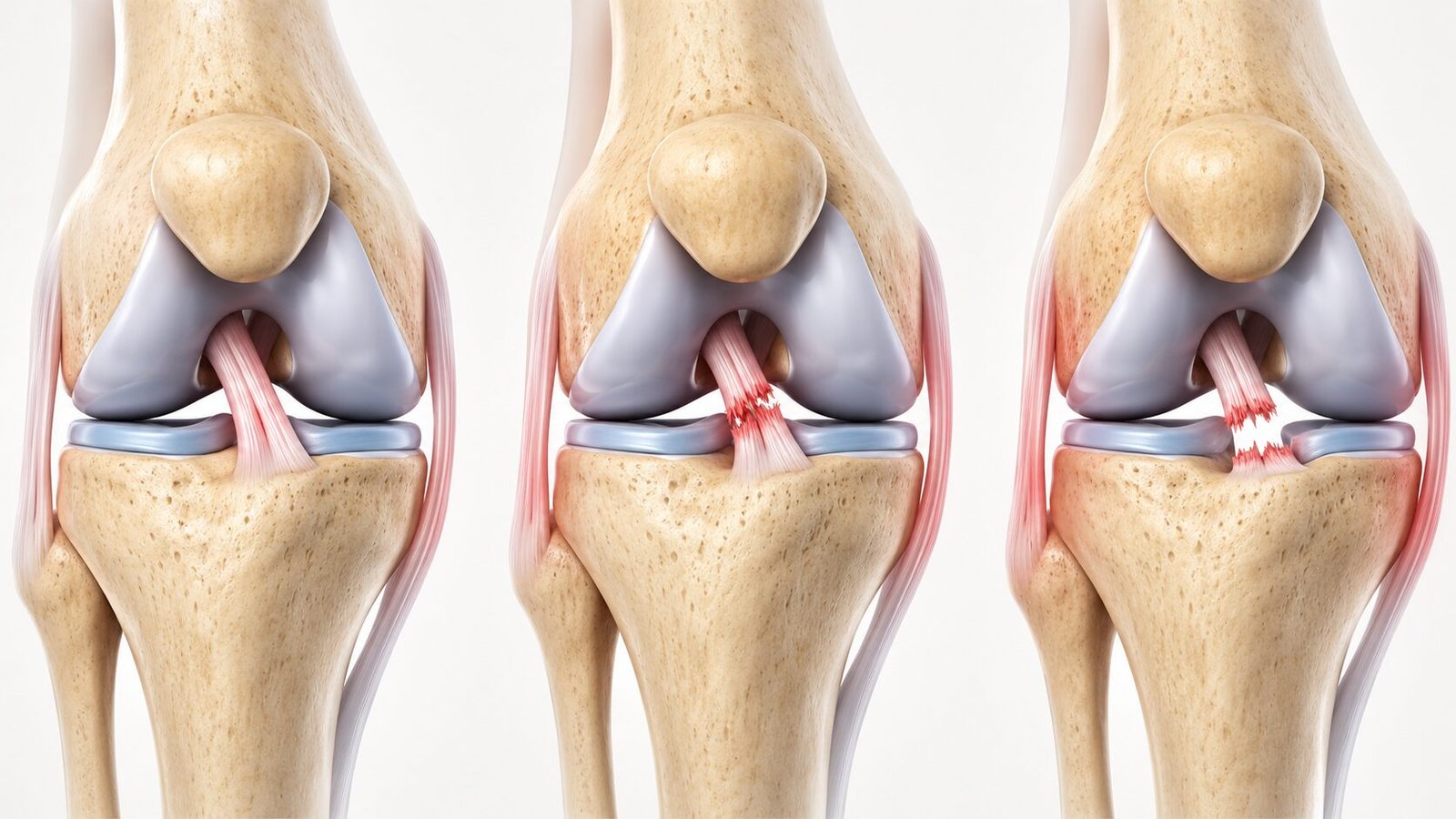
The ACL runs diagonally through the centre of the knee and prevents the shin bone from sliding too far forward. A tear interrupts that stabilising function.
The mechanism- Most tears occur when the foot stays planted and the knee twists during a sudden stop or an awkward landing.
The popping sensation- Many patients report a distinct pop at the moment of injury, followed by swelling within a few hours.
The instability- A torn ACL causes the knee to feel as though it may buckle, particularly when changing direction.
The healing limitation- The ligament has a limited blood supply, so a complete tear cannot rejoin on its own.
This healing limitation is central to the question of whether surgery is required.
What Are the Symptoms of an ACL Tear?
Some symptoms appear immediately, while others develop over the following days.
A loud pop at the moment of injury, often described as something giving way inside the knee.
Rapid swelling, usually within the first few hours.
Pain that makes it difficult to put full weight on the leg.
A knee that feels loose or unstable, particularly on stairs or uneven ground.
Reduced range of motion, with the knee feeling stiff and difficult to straighten fully.
A hard fall or tackle can injure bone as well as ligament, so prompt fracture and trauma care forms part of a complete assessment.
Injured your knee and unsure of the severity? Get it examined before the swelling settles. 👉
How Is an ACL Tear Diagnosed?
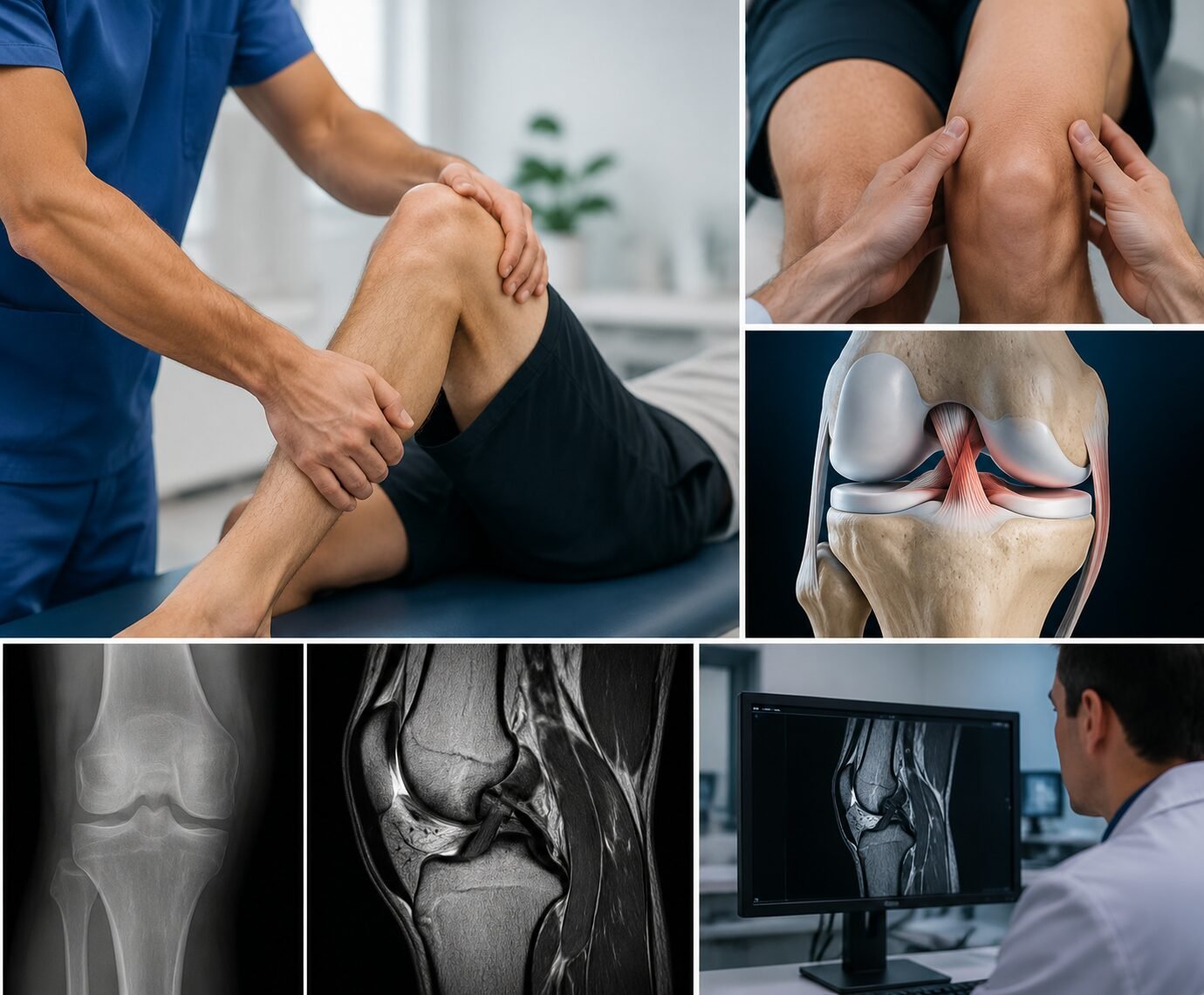
A torn ACL cannot be confirmed by sight alone, so diagnosis combines a physical examination with imaging.
Physical tests such as the Lachman test and the anterior drawer test assess how far the shin moves forward.
An MRI scan shows the ligament in detail and identifies whether the tear is partial or complete.
An X-ray rules out an accompanying fracture, as bone and ligament injuries often occur together.
An assessment of the meniscus and cartilage, since these structures are frequently injured alongside the ACL.
The MRI is the most important test, as it confirms the grade and guides the treatment plan.
Can an ACL Tear Heal Without Surgery?
A partial ACL tear can recover sufficiently for the knee to function reliably again. A complete tear cannot rejoin on its own. A tear that cannot heal naturally, however, does not always require surgery.
Non-surgical treatment is generally suitable for patients who:
- have a partial tear with no instability symptoms
- maintain a stable knee during walking and daily activity
- do light manual work or follow a low-demand, sedentary lifestyle
- do not participate in sports involving cutting or pivoting
When the knee is a suitable candidate, conservative care focuses on rebuilding strength and control.
Physiotherapy- A structured programme strengthens the hamstrings, quadriceps, and hip muscles so they support the stabilising role of the ACL.
Bracing- A functional knee brace provides support through the early recovery period.
Activity modification- Replacing high-pivot sport with low-impact activity such as swimming or cycling reduces strain on the joint.
Prehabilitation- Even when surgery is likely, early strengthening exercises improve knee function and lead to better outcomes after the procedure.
Non-surgical recovery usually takes at least three months of consistent rehabilitation. For confirmed complete tears, arthroscopy treatment in Firozabad provides a minimally invasive method of reconstructing the ligament when rehabilitation alone is insufficient.
Is ACL Surgery Better Than Physiotherapy?
Neither option is universally superior. The appropriate choice depends on the grade of the tear and the patient’s intended activity level.
| Feature | Physiotherapy | ACL Surgery |
|---|---|---|
| Main goal | Restore strength and stability | Rebuild the torn ligament |
| How it works | Trains muscles to support the knee | Replaces the ACL with a graft, performed arthroscopically |
| Best suited for | Partial tears, low-pivot lifestyles | Complete tears, athletes, active patients |
| Recovery time | At least three months | Six to nine months for full sport |
| Main limitation | May not suit high-demand sport | Involves a surgical procedure and rehabilitation |
Many patients recover well with rehabilitation alone. Others, particularly younger and more active patients, are better suited to reconstruction. A specialist assessment determines which approach is appropriate.
Unsure which treatment your knee requires? A clear diagnosis provides the answer.
When Should You See a Doctor for an ACL Tear?
Certain knee injuries require prompt medical attention rather than a delayed appointment.
A loud pop followed by rapid swelling after a sports injury or fall.
A knee that gives way or buckles during ordinary walking.
Pain and instability that have not improved after several weeks of rest.
Difficulty straightening the knee or bearing weight on the leg.
A previous knee injury that now feels worse or less stable.
Untreated instability gradually damages the meniscus and cartilage, which increases the risk of early arthritis. Early treatment keeps management straightforward.
When Should You See a Doctor for an ACL Tear?
Certain knee injuries require prompt medical attention rather than a delayed appointment.
A loud pop followed by rapid swelling after a sports injury or fall.
A knee that gives way or buckles during ordinary walking.
Pain and instability that have not improved after several weeks of rest.
Difficulty straightening the knee or bearing weight on the leg.
A previous knee injury that now feels worse or less stable.
Untreated instability gradually damages the meniscus and cartilage, which increases the risk of early arthritis. Early treatment keeps management straightforward.
Why Choose Dr. Parv Mittal for ACL Tear Treatment in Firozabad?
The choice of treating doctor is as important as the decision to seek treatment.
Dr. Parv Mittal is a trusted orthopedic specialist in Firozabad with M.S. Orthopaedic Surgery, MRCS (UK), and DNB Orthopaedics, supported by over 10 years of experience across reputed hospitals in New Delhi. His training in sports medicine and arthroscopy enables him to manage ACL injuries at every stage, using both surgical and non-surgical methods.
Patients complete the first consultation with a clear understanding of their condition and a defined treatment plan, whether that involves a structured rehabilitation programme or arthroscopic reconstruction. This combination of accurate diagnosis and modern surgical technique makes him a reliable choice for ACL tear treatment in Firozabad.

Frequently Asked Questions
Can an ACL tear heal on its own without surgery?
A partial tear can recover with physiotherapy, but a complete tear cannot rejoin naturally because the ligament has a limited blood supply.
How long does it take to recover from an ACL tear?
Non-surgical recovery takes at least three months, while a full return to sport after surgery can take six to nine months.
Can I walk with a torn ACL?
Many patients can walk, but the knee may feel unstable during twisting or turning until the surrounding muscles are strengthened.
Is ACL reconstruction a major surgery?
It is usually performed arthroscopically through small incisions, so recovery is quicker and most patients return home the same day.
What happens if an ACL tear is left untreated?
Ongoing instability can damage the meniscus and cartilage, increasing the risk of early knee arthritis later in life.