
 English
 हिंदी
Hip replacement surgery is a common procedure for those who have severe hip arthritis or damage to the joint. However, the operation is just one step in the process. The degree of strength and flexibility of the muscles around the hip prior to surgery and a programme of exercise following surgery both affect the comfort of the person in their day-to-day activities.
This article covers the exercises typically recommended before and after hip replacement surgery, their importance, and precautions to take. It is not intended as a replacement for the advice of your own surgeon or physiotherapist and is simply general information.
“Exercise around a hip replacement is not one-size-fits-all. The right routine depends on the person’s age, strength, the surgical approach used and how recovery is progressing.” Dr. Parv Mittal, Orthopaedic Surgeon, Firozabad
Why Exercise Matters Around Hip Replacement
People with a painful hip typically restrict their movement. The muscles that hold the hip joint in place, particularly the glutes, quadriceps and hip flexors, may weaken and tighten over time. The goal of exercise before and after surgery is to:
- Maintain muscle strength: The stronger the muscles, the better they will support the new joint.
- Preserve range of motion: Gentle movement helps prevent stiffness.
- Support circulation: Walking around regularly through the ankles and legs helps prevent blood clots after surgery.
- Build familiarity: Learning the exercises before surgery makes them easier to follow afterwards.
Exercises Commonly Advised Before Hip Replacement (Pre-Habilitation)
Exercises before surgery should be low impact and within the comfortable range. If exercise causes a sudden and significant increase in hip pain, stop exercise and notify your doctor or physiotherapist.
- Ankle pumps: Lying or sitting, lift foot and lower the foot. Repeat 10 to 20 times.
- Quadriceps sets: Lying leg straight, squeeze the quads and press the back of the knee flat to the bed. Wait a couple of seconds before relaxing.
- Gluteal squeezes: Squeeze glutes and hold for a short period of time.
- Heel slides: While lying on your back, gently pull the heel towards the buttock and back.
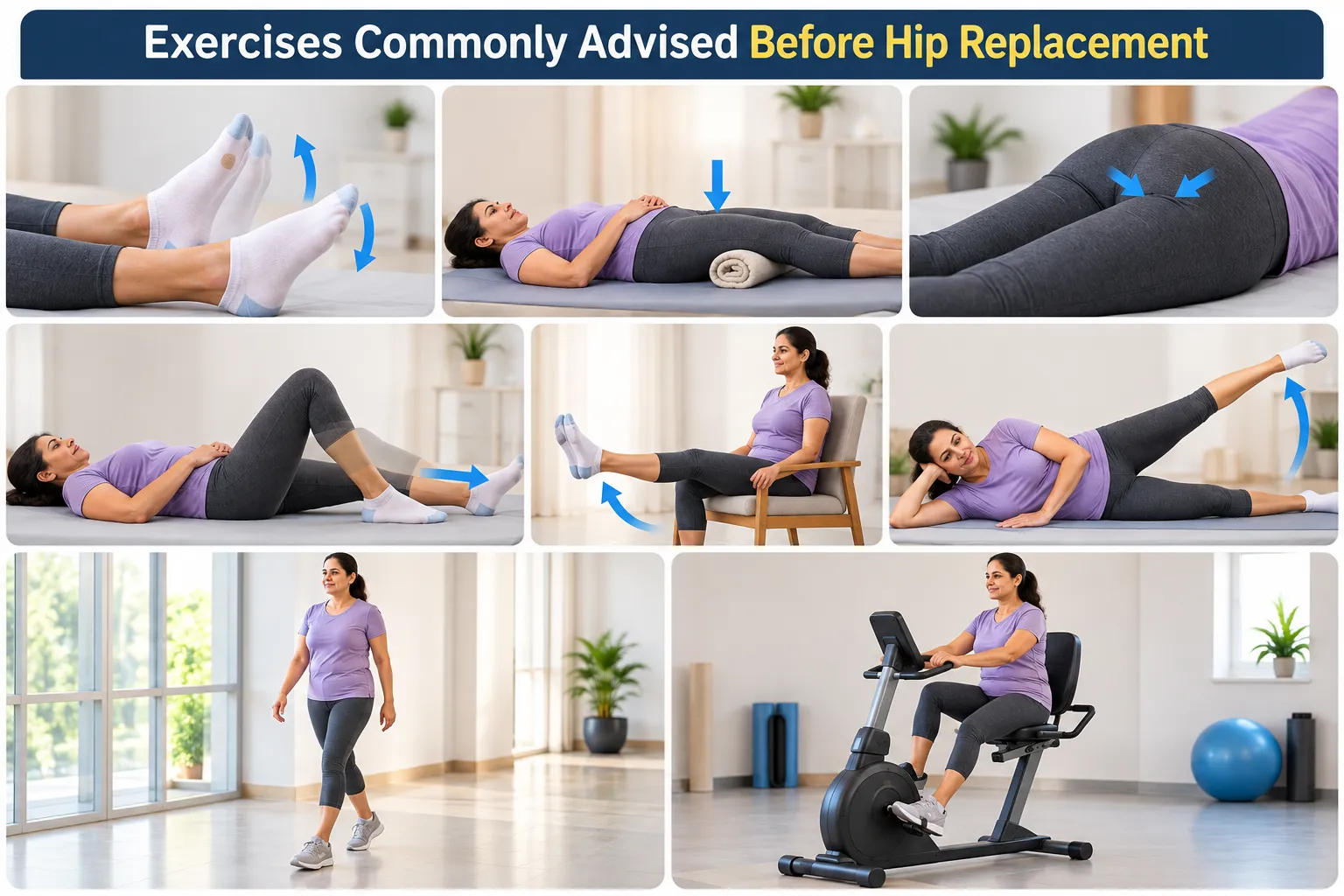
- Seated or supported knee extensions: Sitting or supported, extend the knee slowly.
- Hip abduction (lying): Slowly move the leg out to the side and back as far as it will go, with the toes pointing up.
- Gentle walking or stationary cycling: walking or stationary bike, as directed by your doctor.
It also helps to practise using a walker or crutches, and to arrange the home in advance (clear pathways, raised toilet seat, secure handrails).
Exercises Commonly Advised After Hip Replacement
Rehabilitation usually starts within a day or so of surgery under physiotherapist guidance and progresses in stages. The timeline varies from person to person.
In the first few days (in hospital):
- Ankle pumps and circular ankle movements
- Quadriceps and gluteal sets
- Assisted sitting, standing and short supported walks
In the first few weeks (at home):
- Heel slides and lying hip abduction
- Short, frequent walks with the walking aid
- Supported mini-squats or standing weight shifts, if advised
- Stair practice with guidance
In the later weeks:
- Gradual strengthening with resistance bands, if advised
- Stationary cycling
- Balance exercises
- Progressive increase in walking distance
Role of the Physiotherapist and Care Team
The exercises are typically provided by a physiotherapist who will monitor you and modify the programme as strength improves. This can include assistance for safe transfer, walking sticks and everyday activities like dressing or getting in and out of a car, provided by nurses, surgical team or an occupational therapist. When you report to the team when you are in pain or have swelling or any difficulty in any exercise they are able to adjust the program for you.
Before vs After Surgery: Exercise Focus at a Glance
| Stage | Main Goal | Typical Examples |
| Before surgery | Maintain strength and mobility | Quadriceps sets, glute squeezes, heel slides, gentle walking |
| First days after surgery | Circulation and safe movement | Ankle pumps, assisted walking, supported transfers |
| Early recovery (weeks) | Regain range of motion and stability | Heel slides, abduction, short walks, stair practice |
| Later recovery | Build strength and balance | Resistance exercises, cycling, balance work |
Precautions to Follow During Recovery
Depending on the surgical approach, your surgeon may advise certain hip precautions. Commonly these include:
- Avoiding bending the hip beyond a right angle
- Not crossing the legs or knees
- Avoiding twisting the operated leg inward or outward while standing
- Using a raised chair and toilet seat
Follow the instructions given for your own case, as they can differ between patients.
Tips for Safe and Effective Exercise
- Aim to build up to a good number of reps slowly, not to a point of pain.
- Break up workouts into short sessions throughout the day rather than one long session.
- Wear appropriate footwear and use the walking stick as instructed.
- Stick to a schedule, consistency is important, not how hard you work.
- Rest when tired, and elevate the operated leg if swelling occurs.
- Take medications and pain management advice as directed by your doctor.
When to Contact Your Doctor
See the treating physician if the pain or swelling in the leg gets worse, the skin around the wound becomes red and warm, you have a fever, drainage from the wound, or sudden trouble putting weight on the leg. Any ongoing warning signs should be assessed promptly and not taken for granted and considered normal recovery.
Frequently Asked Questions
Should I exercise before hip replacement surgery?
Gentle, doctor-approved exercises are commonly advised to maintain strength and mobility. The suitable routine depends on your pain level and overall health.
When do exercises start after hip replacement?
Most patients begin basic movements and supported walking within a day or two of surgery, as guided by the surgical team and physiotherapist.
How long do I need to do the exercises after surgery?
Structured exercises usually continue for several weeks to a few months. Many people continue general strengthening and walking beyond that.
Which exercises should I avoid after hip replacement?
Deep squats, crossing the legs, excessive hip bending and high-impact activities are often restricted early on. Your surgeon will advise what applies to you.
Can I do these exercises without a physiotherapist?
Basic exercises are often taught for home practice, but supervision helps ensure correct technique and safe progression.
How do I know if my exercise routine is right for me?
A clinical examination and discussion with your surgeon and physiotherapist is the most reliable way to confirm this.