
 English
 हिंदी
हिंदी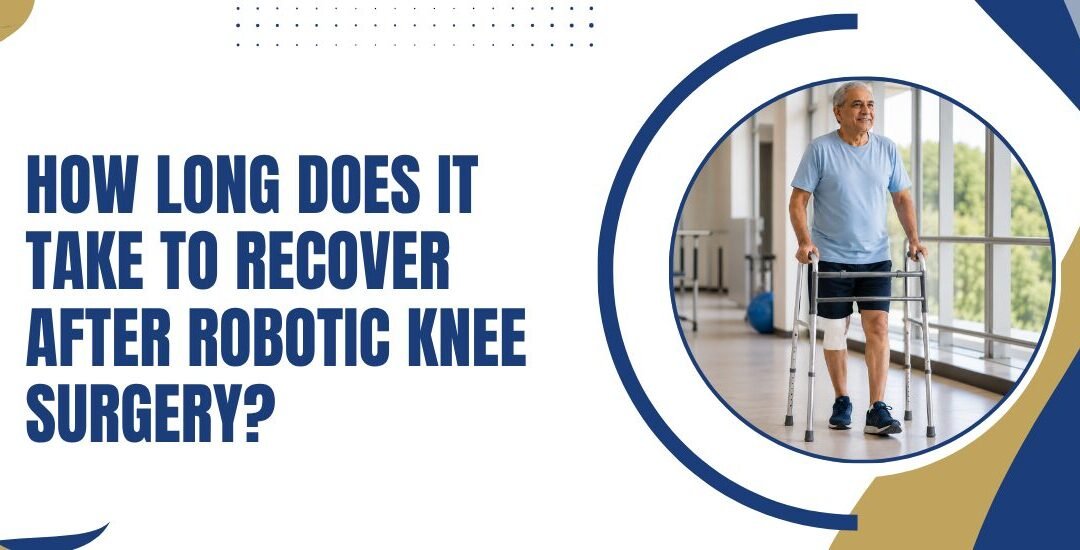
Most patients return to their daily routine within three to six months after robotic knee surgery, though deeper tissue healing continues for close to a year. Early milestones move fast though. Standing happens within a day, walking unaided by four to six weeks, and light sport by around three months.
According to Dr. Parv Mittal, orthopedic doctor in Firozabad, “Patients want a single number, but recovery isn’t one clock. Some milestones move fast. Full internal healing takes its own time regardless of the technique. I tell patients to trust the process, not the calendar on the wall.”
What Does Recovery Look Like Week by Week?
Recovery isn’t one long stretch. It moves in distinct phases, each with its own goal.
The First 24 to 48 Hours: Most patients stand and take a few assisted steps within a day of surgery. Physiotherapy usually starts here, not after discharge.
Weeks 2 to 6: Pain drops steadily and walking distance builds. Independent walking without support typically arrives somewhere in this window.
Months 2 to 3: Strength and range of motion keep improving. Low impact activity, cycling, swimming, brisk walking, often gets the green light around here.
Months 4 to 12: This stretch is quieter on the outside. Internally, the tissue around the implant is still settling in, which is why surgeons ask patients to hold off on high impact sport until this phase wraps up.
Every timeline shifts slightly based on age, fitness level and how closely rehab gets followed after robotic knee surgery. None of that is unusual.
Does Robotic Surgery Actually Speed Up Recovery?
Not in the way most patients expect. It’s not a shortcut. It’s a different curve.
Early Weeks Tend to Favor Robotic Cases: Several comparative studies report less pain and quicker functional gains in the first four to six weeks with robotic assisted technique.
One Year Outcomes Look Similar: By twelve months, robotic and conventional knee replacement generally land at comparable functional scores. The gap narrows.
Precision Plays a Quiet Role: Better alignment early on may reduce strain on the joint over time, though long term data is still building.
Rehab Still Does the Heavy Lifting: No robotic arm replaces consistent physiotherapy. The surgery sets the stage. The patient’s follow through decides the outcome.
If you’re weighing a different surgical decision altogether, this breakdown of arthroscopy versus open surgery covers similar ground on recovery differences between techniques.
Wondering what your own recovery timeline might look like?
Why Choose Dr. Parv Mittal for Robotic Knee Surgery?
Dr. Parv Mittal has guided knee replacement recovery for over ten years across hospitals in New Delhi and now Firozabad. His fellowship in robotic assisted knee and hip arthroplasty at Tan Tock Seng Hospital, Singapore, included hands on training in structured post surgical rehabilitation, not just operating room technique. Every patient leaves surgery with a recovery plan built around their case, age and activity level, not a generic handout. Physiotherapy coordination starts early and adjusts as milestones are hit or missed.
Recovery is managed week by week, not left to chance. Complications get caught early because follow up isn’t an afterthought here. Call +91 99908 48807 to book your consultation.

Frequently Asked Questions
When can I walk without support after robotic knee surgery?
Most patients walk independently between four and six weeks post surgery.
Is robotic knee surgery recovery faster than traditional replacement?
Early weeks tend to feel easier; one year outcomes are usually similar.
When can I resume sports after robotic knee surgery?
Low impact sport is often possible around three months, with guidance.
How long until the knee fully heals internally?
Deep tissue healing typically continues for close to twelve months.
Disclaimer:
This blog is for educational purposes and doesn’t replace professional medical advice. If you have concerns about your recovery, please consult your orthopedic surgeon.